

Categories
- All blogs (4)
- Netsuite ERP (7)
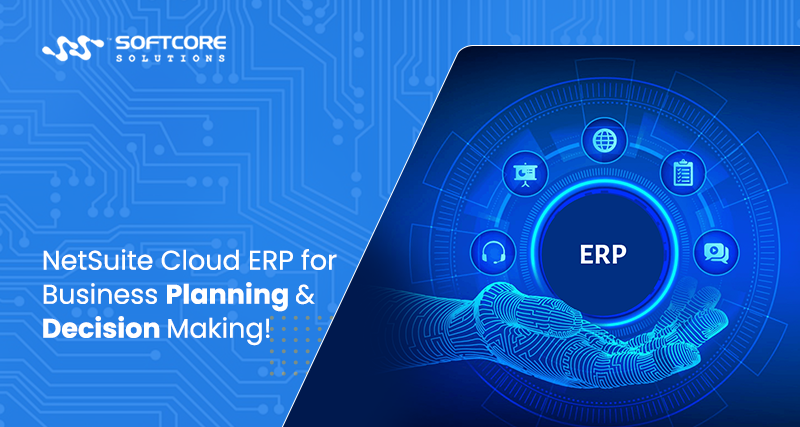
NetSuite Cloud ERP for Business Planning and Decision-making!
ERP software solutions have been active in different businesses for decades. However, outdated ERP systems tend to cost a lot to implement and maintain and require a lot of extra work. This is where Oracle NetSuite Cloud ERP comes in. Cloud ERP is a cloud-based platform where businesses get to enjoy the benefits of legacy ERP systems but with a lot more added benefits, such as accessibility, cost, and scalability. At SoftCore Solutions, we understand the challenges businesses face and provide the solution that enables planning and decision-making.
In this article, we will discuss how Cloud ERP assists in planning and decision-making in a business.
Access and analyze data in real time
Cloud ERP allows businesses to have real-time access to important business data. This portal allows decision-makers to access relevant data to make a decision. Accessing data from legacy ERP systems can take time and requires more than one employee’s expertise.
With the cloud ERP systems, businesses can access and review data from any device at any time. Remote data access allows businesses to determine necessary actions and enhance planning and decision-making.
Improved collaboration
Cloud ERP systems also foster collaboration across different divisions and teams. With legacy ERP systems, departments often operate in isolation, which makes data sharing and collaboration challenging.
However, Cloud ERP allows users to access data stored together in one software solution to promote teamwork. Enhanced collaboration allows teams to work together more efficiently, resulting in better planning and decision-making.
Enhanced scalability
Perhaps the most important feature of Cloud ERP is its scalability. With legacy ERP systems, extensive investments and resources are needed to scale.
With Cloud ERP, businesses can adapt the systems to the desired extent. This allows firms to adjust rapidly to changes in the environment, like a rise in demand, without significant costs. This flexibility of Cloud ERP is beneficial for planning and decision-making.
Reduced costs
Cloud ERP systems also cost less than legacy ERP systems. Legacy ERP systems typically require significant investments in hardware, software, and infrastructure that take time to fully develop. Ongoing maintenance and upgrades can be expensive.
With Cloud ERP, businesses pay for the software solution on a subscription basis, reducing upfront costs. It can reduce ongoing maintenance costs because the cloud provider maintains the software solution. This reduced cost enables businesses to invest in other areas of the company, leading to better planning and decision-making.
Customization and flexibility
Cloud ERP systems also offer greater customization and flexibility than legacy ERP systems. With legacy ERP systems, customization can be expensive and time-consuming.
But with Cloud ERP, businesses can choose the features they need and customize the software solution to meet their specific needs. This customization and flexibility enable businesses to create software solutions tailored to their unique requirements, leading to better planning and decision-making.
Conclusion
Cloud ERP affects businesses’ planning and decision-making. By providing real-time data access and analysis, improving collaboration, enhancing scalability, reducing costs, and offering customization and flexibility, Cloud ERP enables businesses to make informed decisions. Cloud ERP is essential for businesses to stay competitive. You can contact the best Oracle NetSuite solution provider in India, SoftCore Solutions. We will help with a tailor-made solution for your business.
Frequently Asked Questions